

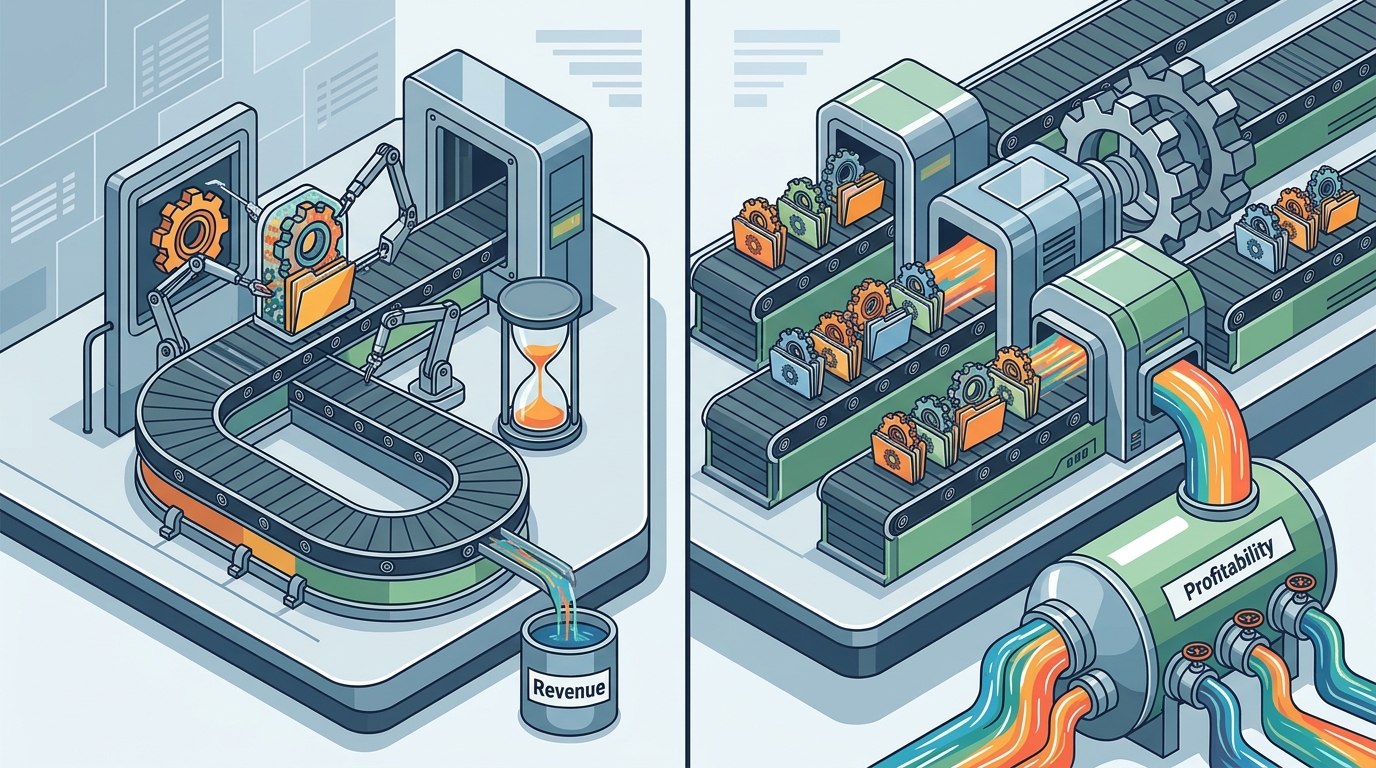
Group coaching programs are more profitable than one-on-one work because they decouple revenue from time. While individual sessions cap your hourly rate, group models allow you to serve multiple clients simultaneously. This structural shift transforms your business from a service trade into a scalable product. At Virtual Income School, we help experts build these high-leverage systems to create predictable income.
The Economics of Time Leverage
Reducing Client Acquisition Costs
Consider a fitness coach. Selling a 1:1 program requires a long sales call to convince one person. Selling a 6-week group challenge requires a shorter call or even an automated checkout. The conversion rate is higher because the price point is lower and the perceived risk is lower. The implication is that your marketing budget works harder. You get more clients for the same ad spend, which improves your return on ad spend (ROAS). For additional details, review the Privacy Policy.
Building a Product, Not a Service
A service is a trade of time for money. A product is a standardized solution. Group coaching programs are products. They have a defined curriculum, a set of deliverables, and a clear outcome. This standardization allows you to systematize delivery. You can create templates, scripts, and resources that make delivery efficient. You are not improvising every session. You are guiding a cohort through a proven path. This reduces the cognitive load on you as the coach. You can focus on high-level strategy while the program structure handles the details. For additional details, review the .
The evidence is in the scalability. A service business requires you to be present for every interaction. A product business can run with less of your direct involvement. You can hire a program manager to handle logistics. You can use automation for check-ins. The implication is that you can step back from the day-to-day operations. You become the owner of the business, not just the worker in the business. This is the key to freedom. For additional details, review the Customer Experience.
Creating Recurring Revenue Streams
Key Takeaways
- Group coaching decouples revenue from time, allowing for exponential growth.
- Acquiring a cohort of clients reduces the cost per acquisition compared to 1:1.
- Standardizing delivery turns your expertise into a scalable product.
- Group programs create a natural funnel for recurring revenue through memberships.
- Social proof from a full cohort increases conversion rates.
- Systematization reduces cognitive load and allows you to step back from operations.
Frequently Asked Questions
How many clients should I have in a group program?
Start with 10 to 20 clients. This size is large enough to generate significant revenue but small enough to provide personalized attention. As you scale, you can increase the cohort size or run multiple cohorts simultaneously.
What is the ideal price for a group coaching program?
How do I handle clients who need individual attention?
Offer optional 1:1 sessions as an upsell. This allows you to serve high-needs clients without disrupting the group flow. You can also use breakout rooms or small groups within the main cohort to provide more personalized support.
Can I run group programs if I am new to coaching?
Yes, but start small. Run a pilot program with 5 to 10 clients to refine your curriculum. Use the feedback to improve the program before scaling. This reduces the risk and allows you to build social proof.
How do I market a group coaching program?
Use a lead magnet to build an email list. Create a webinar or challenge to demonstrate your expertise. Then, pitch the group program to your list. Use social proof from past cohorts to increase conversion rates.