

Virtual Income School helps established coaches scale their coaching business by providing the systems, strategy, and hands-on support needed to attract paying clients and grow revenue. This guide covers the specific scaling frameworks, operational components, and strategic shifts required to move from a service-based model to a predictable, high-ticket online coaching enterprise.
Scaling Frameworks for Established Coaches
Scaling a coaching business is not simply about working harder or acquiring more clients through the same channels. It requires a fundamental shift in how the business is structured and delivered. Scaling framework is a structured approach to growing a business by optimizing systems, offers, and lead flows rather than relying solely on individual effort. For established coaches, the primary barrier to growth is often not a lack of expertise, but a lack of a clear business architecture built around that expertise.
From Service Provider to Business Owner
The Role of Systems in Growth
Systems are the backbone of a scalable coaching business. A system is a repeatable process that produces a consistent result. In the context of coaching, this includes lead generation, sales processes, and client onboarding. When these processes are documented and automated where possible, the business can grow without the owner being present for every interaction. Virtual Income School focuses on building these systems to ensure that growth is sustainable and predictable.
Strategic Positioning for High-Ticket Clients
High-ticket coaching requires a different positioning strategy than low-ticket group programs. It demands authority, trust, and a clear demonstration of value. Coaches must position themselves as the go-to expert for their niche. This involves creating content that speaks directly to the pain points of high-value clients. It also requires a sales process that is consultative rather than transactional. The goal is to attract clients who are ready to invest in transformation, not just information.
The Gap: Why Information Is Not Enough
Most coaches do not need more information. They need the right business built around their expertise. The coaching industry is saturated with courses, webinars, and books that provide theoretical knowledge. However, knowledge without execution leads to stagnation. The gap between knowing what to do and actually doing it is where most coaching businesses fail to scale.
The Execution Deficit
Why Generic Advice Fails
Generic advice often fails because it does not account for the specific context of the coach's business. What works for one niche may not work for another. What works for a new coach may not work for an established one. Therefore, the help a coach receives must be tailored to their specific situation. This requires a deep understanding of the coach's goals, strengths, and challenges.
Operational Components of a Scalable Business
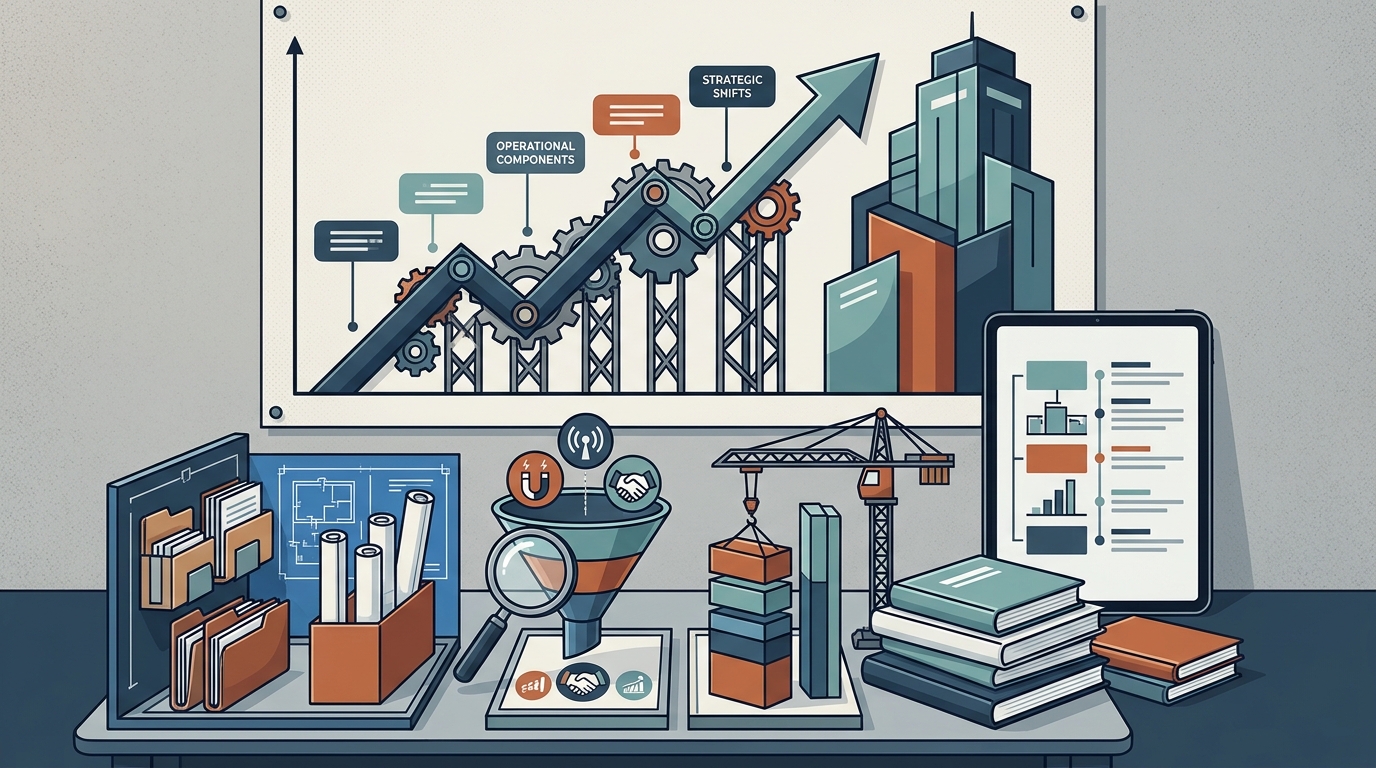
A scalable coaching business is composed of several key operational components. These components work together to create a seamless client experience and a predictable revenue stream. Understanding and optimizing each component is essential for long-term growth.
Lead Flow Systems
A lead flow system is a sequence of touchpoints that guides a prospect from awareness to purchase. This system typically includes content marketing, email sequences, and sales calls. The goal is to nurture leads over time, building trust and demonstrating value before asking for a sale. An effective lead flow system ensures that coaches are not constantly chasing leads, but rather attracting them through a consistent and valuable presence.
Sales Process and Paid Ads
The sales process is the final stage of the lead flow. It involves a structured conversation that addresses the prospect's needs and presents the coaching offer as the solution. For high-ticket offers, this process is often consultative, involving a discovery call and a proposal. Paid ads can be used to accelerate the lead flow by targeting specific audiences with compelling messages. However, ads must be integrated with a strong sales process to be effective.
Backend Technology and Support
Comparison of Scaling Approaches
There are different approaches to scaling a coaching business. Each approach has its own strengths and weaknesses. The table below compares three common approaches: self-guided learning, generic online courses, and specialized coaching support.
| Approach | Strengths | Weaknesses | Best For |
|---|---|---|---|
| Self-Guided Learning | Low cost, flexible schedule | Lack of accountability, slow progress | Coaches with strong self-discipline |
| Specialized Coaching Support | Personalized guidance, hands-on support | Higher cost, requires commitment | Established coaches ready to scale |
Key Takeaways
- Scaling a coaching business requires a shift from a service-based model to a system-based model.
- A clear, high-ticket offer is essential for attracting the right clients.
- Lead flow systems and sales processes are critical for predictable revenue.
- Hands-on support helps coaches overcome the execution deficit.
- Backend technology and ongoing support improve the client experience.
- Virtual Income School provides the systems and strategy needed to scale a coaching business.
Frequently Asked Questions
What is the main barrier to scaling a coaching business?
The main barrier is often a lack of a clear business architecture. Coaches may have expertise but lack the systems, offer, and lead flow needed to attract and retain high-ticket clients. This gap between knowledge and execution prevents sustainable growth.
How does Virtual Income School help coaches scale?
Virtual Income School provides the systems, strategy, and hands-on support to attract paying clients and grow a coaching business. It focuses on building a clear offer, creating a lead flow system, and implementing a sales process that is tailored to the coach's specific niche and goals.
Is a high-ticket offer necessary for scaling?
What role does paid advertising play in scaling?
Paid advertising can accelerate the lead flow by targeting specific audiences with compelling messages. However, it must be integrated with a strong sales process and lead flow system to be effective. Ads alone are not enough; they must be part of a broader strategy.
How important is backend technology for a coaching business?
Backend technology is crucial for streamlining operations and improving the client experience. The right tools can automate repetitive tasks, manage client communications, and deliver content efficiently. This allows coaches to focus on high-value activities like strategy and client relationships.
Can established coaches still benefit from coaching support?
Yes, established coaches can benefit significantly from coaching support. They often face different challenges than new coaches, such as breaking through revenue plateaus or transitioning to a new offer. Specialized support can help them navigate these challenges and continue to grow.
What is the difference between a lead flow system and a sales process?
A lead flow system is the sequence of touchpoints that guides a prospect from awareness to purchase. A sales process is the final stage of this sequence, involving a structured conversation that addresses the prospect's needs and presents the offer. The lead flow system builds trust, while the sales process closes the deal.
How long does it take to scale a coaching business?
The time it takes to scale a coaching business varies depending on the coach's starting point, niche, and level of commitment. However, with the right systems and support, significant growth can be achieved within a few months. Consistency and execution are key to achieving sustainable growth.
Conclusion
Scaling a coaching business requires more than just expertise. It requires a clear business architecture, effective systems, and hands-on support. Virtual Income School provides the tools and guidance needed to build a profitable online coaching business. By focusing on the right offer, lead flow, and sales process, established coaches can achieve sustainable growth and create more freedom. To see how we can help you transform your coaching business, apply to work with us.